
NASA Prepares Artemis Rocket for Historic Lunar Mission After Half-Century Hiatus
A 10-day circumlunar voyage scheduled for April will mark humanity's return to deep space exploration
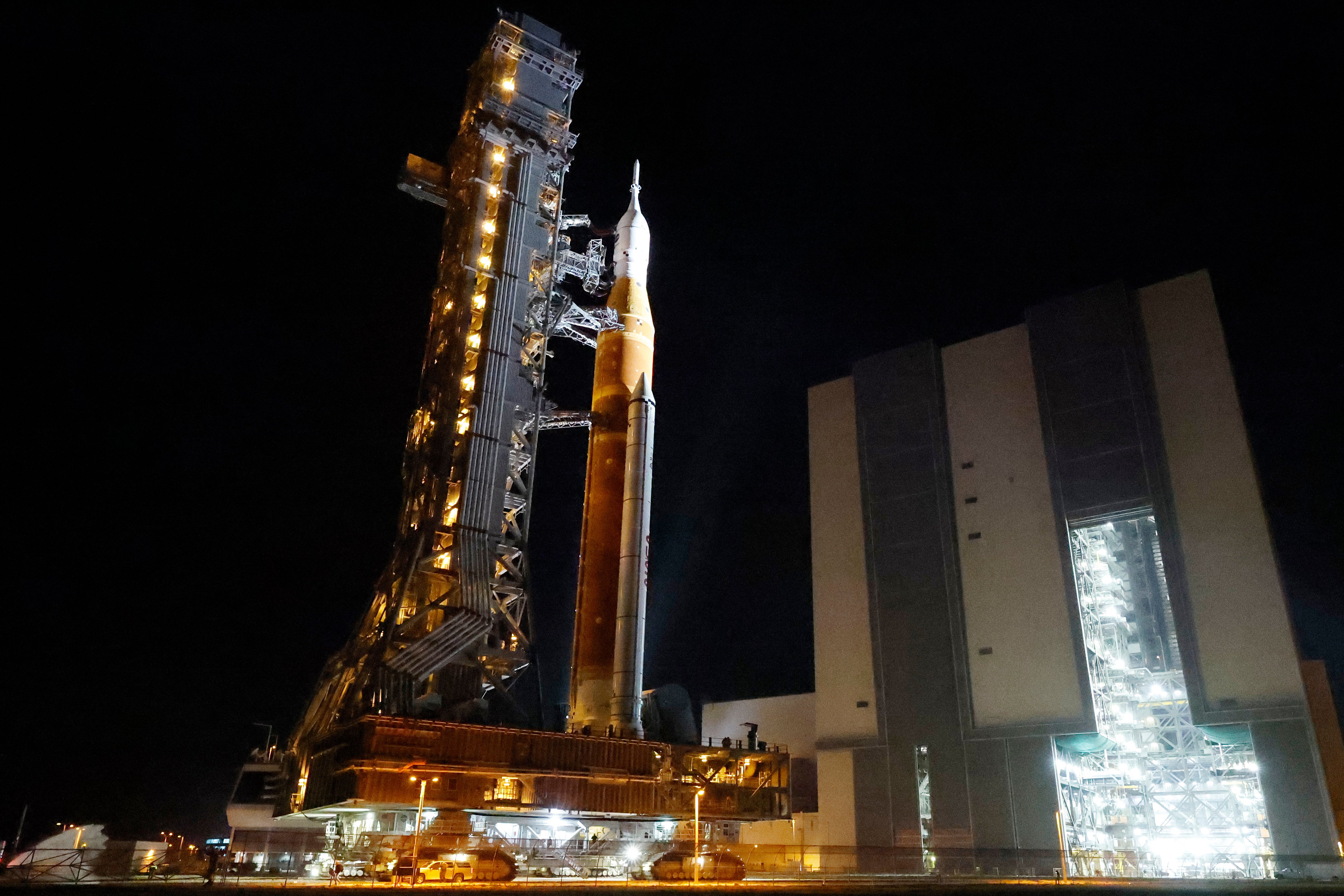
NASA has transported its Artemis II launch vehicle to the Cape Canaveral launch complex, positioning the agency for its first crewed lunar flyby mission since the Apollo era ended over 50 years ago.
The agency plans to deploy its Space Launch System rocket paired with the Orion crew capsule to carry a four-person crew on a lunar trajectory next month, executing a circumlunar flight profile with direct Earth return.
This marks the second rollout of NASA's heavy-lift lunar vehicle from its assembly facility to the pad this year. Engineering teams previously detected a helium flow anomaly affecting the rocket's upper stage propulsion system, necessitating a return to the Vehicle Assembly Building for corrective maintenance.
During the VAB servicing period, engineering personnel conducted comprehensive system refreshes and validation testing across multiple rocket subsystems.
The Artemis II crew comprises NASA astronauts Reid Wiseman, Victor Glover, and Christina Koch, alongside Canadian Space Agency astronaut Jeremy Hansen. Their approximately 10-day mission represents the inaugural crewed demonstration flight within the broader Artemis program architecture.
This mission serves as a critical pathfinder for subsequent operations designed to establish sustained lunar surface presence and enable eventual crewed Mars exploration.
NASA's last crewed lunar mission, Apollo 17, concluded in 1972. The revitalized Artemis initiative targets a two-astronaut surface landing by 2028.
In late February, newly appointed NASA Administrator Jared Isaacman unveiled significant restructuring of the Artemis mission sequence.
Citing concerns over mission cadence and extended intervals between flights, Isaacman inserted an additional Earth-orbital shakedown mission for next year.
This insertion redesignates the new flight as Artemis III, pushing the two-astronaut lunar landing to Artemis IV. Isaacman has established an ambitious goal of executing one or potentially two lunar surface missions during 2028.
A recent audit from NASA's Office of Inspector General highlighted the need for contingency protocols addressing potential crew rescue scenarios during lunar operations.
The report emphasized that landing operations near the lunar south pole present substantially greater risk compared to Apollo-era equatorial landing sites, primarily due to challenging polar topography.
NASA's commercial lunar lander contractors, SpaceX under Elon Musk and Blue Origin led by Jeff Bezos, have intensified development efforts to align with the revised 2028 landing timeline.
SpaceX's Starship vehicle, designated to transport astronauts from lunar orbit to the surface, is scheduled for its next orbital test flight in April.
Additional reporting from agencies
Join our commenting forum
Join thought-provoking conversations, follow other Independent readers and see their replies
Comments
Bookmark popover
Removed from bookmarks