
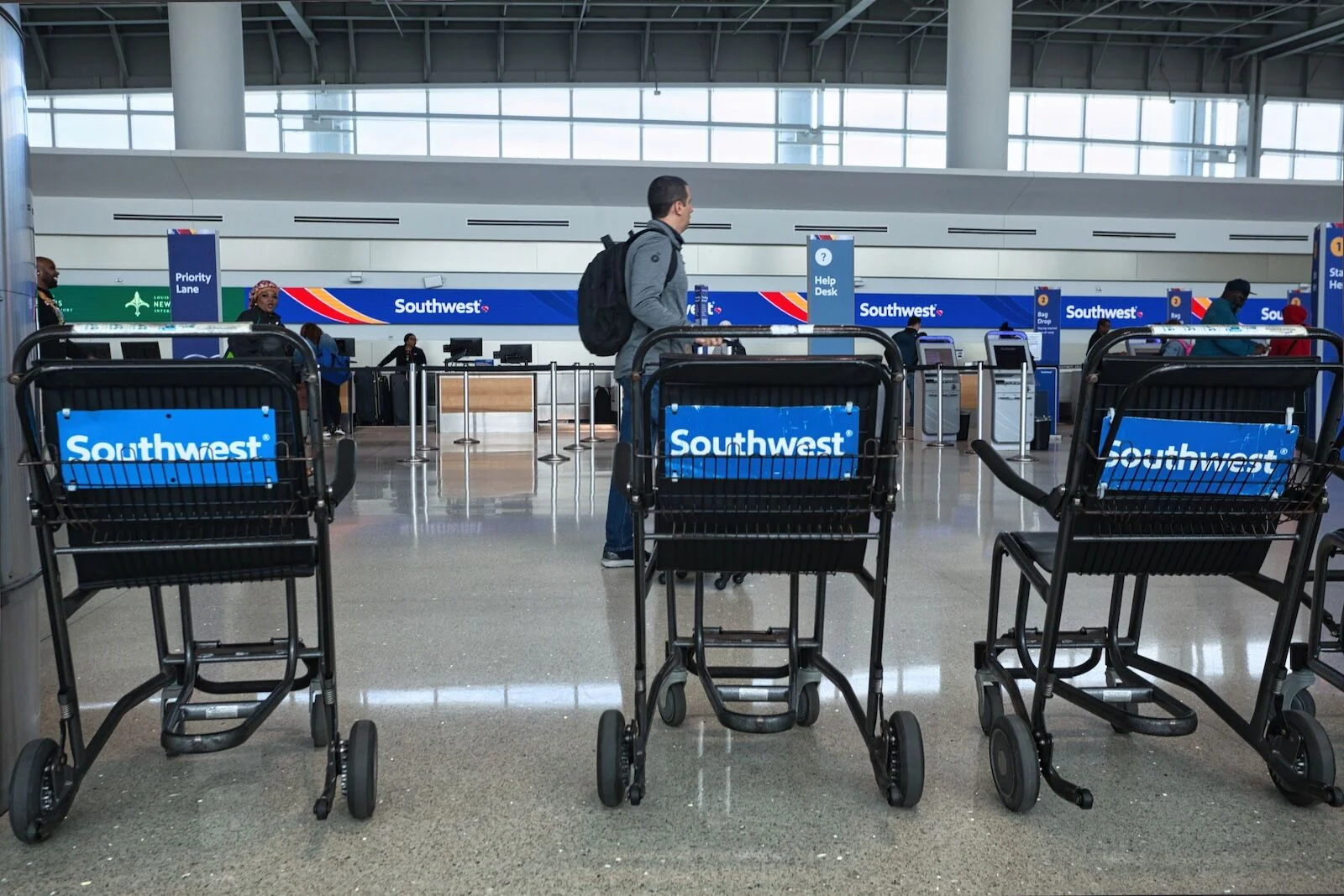
Southwest Airlines is implementing a new operational strategy that targets carry-on luggage management at an earlier checkpoint in the passenger journey. According to Gate Access founder Caleb Harmon-Marshall in a Yahoo! Creators report, internal company documentation reveals that the carrier is directing ticket counter staff to proactively request voluntary bag checks from passengers before they proceed through security screening. This initiative follows the airline's recent elimination of open seating and its departure from two major airport facilities.
The operational shift represents a tactical approach to alleviating gate-area congestion and accelerating aircraft boarding sequences. By intercepting potential overhead bin capacity issues at the initial customer touchpoint, Southwest aims to redistribute cabin baggage pressure away from gate agents who traditionally manage these situations during the boarding process itself.
Passengers checking in at Southwest counters may now encounter staff inquiries regarding their willingness to gate-check items originally intended as carry-ons. This preemptive solicitation mechanism seeks to mitigate the boarding bottlenecks that frequently occur when cabin storage reaches saturation. Harmon-Marshall emphasizes that travelers should interpret this development as a workflow optimization measure rather than a restoration of the airline's historically passenger-friendly baggage policies. The practice functions as a capacity management tool designed to maintain operational efficiency at the boarding gate.
This procedural modification carries particular significance given Southwest's established reputation for accommodating baggage policies and streamlined airport operations. While the earlier intervention point may reduce gate delays, it fundamentally alters the decision-making timeline for passengers regarding luggage handling.
Travelers booking Southwest flights should anticipate potential check-in counter discussions about baggage and ensure that critical items—including medications, electronics, valuables, and travel essentials—remain accessible in personal items that will stay with them throughout the journey. Current evidence suggests this represents an enhanced baggage flow management protocol rather than a comprehensive revision of the carrier's carry-on allowance framework. 